Nike Foundation: Springster Brand Strategy
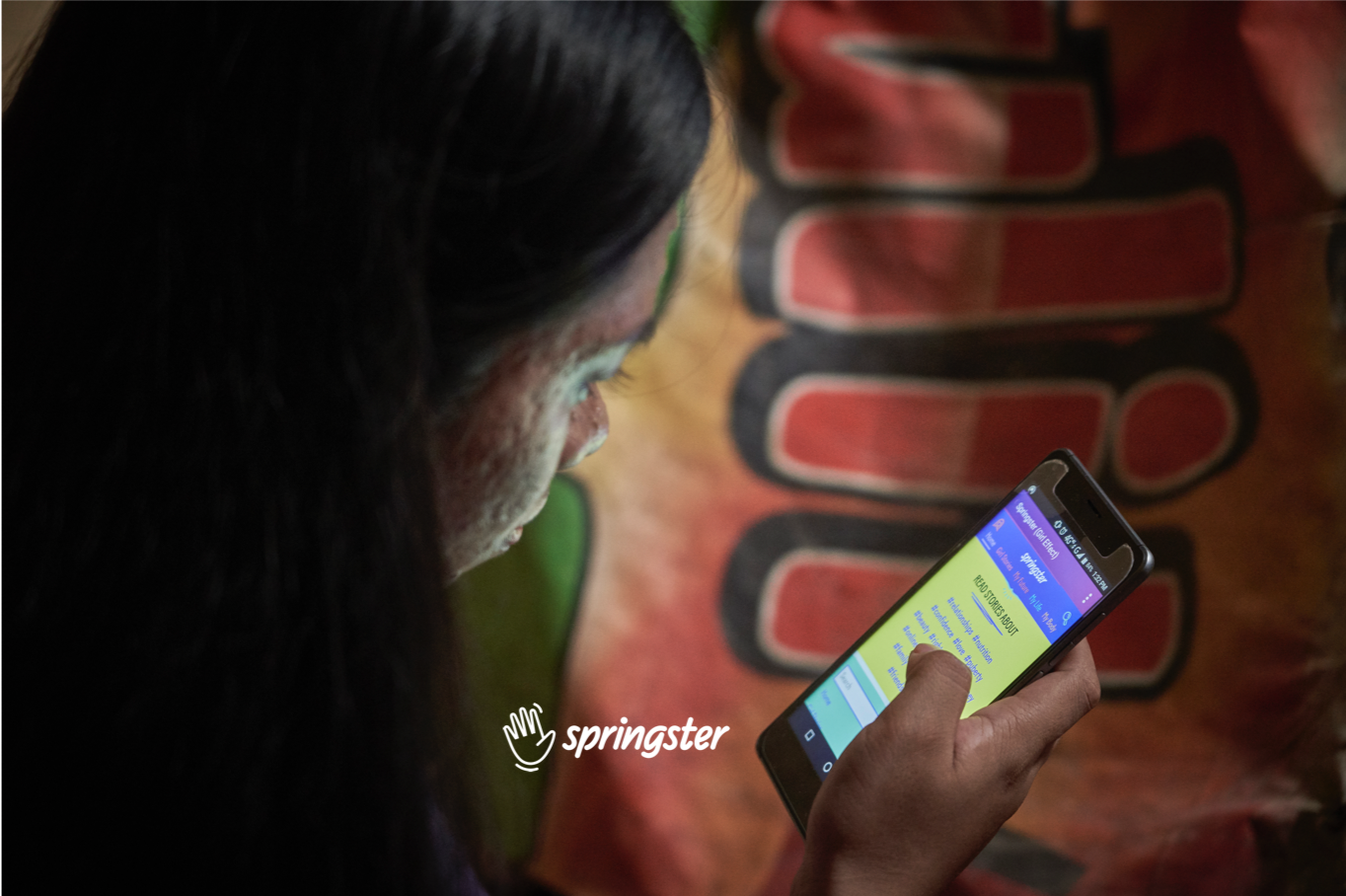
Springster case study video
© credit: Girl Effect (girleffect.org)
CASE STUDY
The context:
Adolescent girls are one of the most vulnerable and marginalised groups in low-income countries. Often girls live in communities where they are not valued and not viewed as equal to boys. They face many threats such as ostracism, forced marriage, early pregnancy, gender-based violence, all those reasons often contribute to curtailing their education and opportunities in life.
Gender norms become increasingly important in influencing girls’ actions during adolescence, a period of immense physiological, psychological and social changes. As their normative frameworks evolve, there is a unique opportunity for shaping their behaviours in ways that will significantly and positively impact their adults’ lives.
Besides, the world is ever more connected. By 2025 it is predicted that 70% (5.8bn) of the world’s population will have access to mobile internet *. With increased digital engagement comes huge opportunities to reach and connect people. And whilst there is still a gender gap with access to technology, our latest research shows that girls, though one of the most isolated populations, are getting their hands on mobile phones too.
Stemming from the belief that a phone has the power to change the world, in 2014, Girl Effect created Springster a global brand aimed at empowering adolescent girls at scale through brand storytelling and mobile technology.
As a content partner on Facebook's Free Basics and local mobile network operators, Springster is available with no data charges to girls who have access to a mobile phone in 50+ countries .
The problem:
In 2018 Springster essentially consisted of a mobile website offering quality text-based content and illustrations, as well as a basic feature-set designed for dumb and smartphones in countries with limited bandwidth.
Even though Springster was accessible free of data charges via the Facebook’s Free Basics portal, its reach and engagement were in steady decline, especially in the brand’s key countries. Also, in media-rich countries such as in South Africa and Indonesia where a number of youth media brands were emerging, Springster was struggling to have a distinctive point of difference.
The opportunity:
Across the globe, girls’ digital media habits were rapidly shifting. In 2017, WhatsApp overtook SMS text messaging in popularity. Facebook was rapidly growing in emerging countries like Indonesia, Philippines and South Africa - Springster’s key countries - and seen as the primary vehicle for consuming branded youth content. Also, chat apps were becoming the dominant social platform for young people’s everyday conversations **.
So to unlock the unique potential of mobile internet to reach and empower girls at scale, we needed to reflect these changes in Springster’s strategy.
The strategy:
To overcome our declining reach and engagement, when I took on Springster as Brand Director, together with my team we conducted 5 major pivots:
Brand:
Springster provided great utilitarian content but not yet an emotional story that would speak to the complex world in which girls live in. To cut through competitive media markets such as Indonesia and South Africa, we had to lead with a brand story, reflecting girls’ lives and aspirations. So based on deep audience insights we evolved Springster’s brand from a mobile platform delivering facts and figures on health, education and economic empowerment to an emotive brand celebrating the convention-defying spirit of all girls.
To bring to life this new brand positioning, we launched rich-media creative campaigns across Africa and Asia. [See the Springster Campaign page]
Product:
We evolved Springster from a steadily declining, fixed, text-based, destination site to a fluid, interactive, content ecosystem, available across rising public and private social channels.
As a result, Springster morphed from a single-product brand (website) into multi-product brand, with each product playing a specific role in the ecosystem:
Facebook would drive mass-reach & engagement;
WhatsApp & Messenger would increase depth & impact
Website would maintain a hygienic, ‘always-on’ presence.
We also launched a chatbot on WhatsApp & Messenger to shift girls’ knowledge and attitude on sexual and reproductive health. [See the Springster Chatbot page]
Shifting our strategic focus towards social media enabled us to be much more effective in micro-targeting girls at scale; designing shorter, simpler and richer user journeys; and in deepening our relationship with our audience through providing personalised and interactive content experiences.
Geography:
Even though Springster was available free of data charge in 50+ countries (via Facebook Free Basics’ portal), only 10 countries contributed to 90% of its reach. So we doubled down our efforts on the few countries where Springster had the most traction and where it had and would continue to have funding - i.e. South Africa and Indonesia.
Operations:
With the content team, we optimised our content production capabilities, evolving our model from hyper-local to ‘glocal’, generating tremendous time and cost efficiencies (50% of budget savings in year 1).
To bolster our presence in Indonesia - a very competitive and media-rich country - we set up a substantial two-year partnership with Dove by Unilever. Our shared goal was to increase girls’ self-esteem and body confidence in key areas of their lives, through harnessing the power of Springster’s brand, content and channels.
Impact:
We beefed up our evaluation methodologies, moving from a qualitative-led research approach to a mixed quantitative and qualitative approach. We added to our regular collection of self-reported data from girls direct data from girls’ online behaviours. The most innovative method was the set up of randomised control trials on Facebook to measure uplift in Indonesian girls’ knowledge, attitude and behaviour on confidence and nutrition.
The results:
From June 2018 to May 2019, Springster achieved its highest reach, with 17.2m girls reached on Facebook, and an average monthly reach of 2.1m.
Springster achieved 2.8m unique clicks (individuals that engaged with our posts). Springster’s Facebook’s high reach compensated for its website’s declining reach, which went from 2m to 1.4m girls users from 2018 to 2019 ***.
In Indonesia, Springster reached 8m girls (75% of the 15-19 y.o. adolescent girl population) in Q1 2019, generated 1.5m reactions and triggered deep conversations around girls’ confidence and nutrition.
In 2019, in South Africa, Springster increased its brand footprint by 60 times in 6 months.
In the same period, content about girls’ confidence concerning puberty and social relationships got the most traction, positioning Springster as a relevant youth brand on critical topics.
Girls generated 80,000 conversations showing their eagerness to engage on Springster’s platforms.
Girls’ feedback has been incredibly positive. Girls all over the world have shared how Springster content has had a tangible impact in their lives, from overcoming everyday problems like saving money or starting a difficult conversation with their parents, through to feeling less isolated in their lives.
“Springster has influenced how I see myself as a girl, how I present myself to people and how I deal with my troubles. Now I know I’ve got tips on my phone.” Girl, Nigeria.
“I come from a broken home and Springster makes it easier to talk about it.” Girl, Philippines.
Recognition & Awards:
* Source: GSMA
** Overall Facebook growth in 2018: +28m (+15%) in Indonesia; +9m (+13%) in the Philippines; +5m (+28%) in South Africa. (Source: We Are Social)
*** On top of a declining reach, we estimated that only 14% of Springster’s users reached via the Free Basics’ portal were girls. (Sources: Free Basics & Girl Effect)
Credit:
Girl Effect: Brand Director: Lorya Roblin; Senior Project Manager: Ximena Benavente; Editorial Director: Khwezi Magwaza; Content Manager: Esther Press; Content Specialist: Tiwalola Ogunlesi; Social Media Manager: Patricia Hutny; Senior Gender & Safeguarding Manager: Lindsey Evans; Safeguarding Consultant: Linda Raftree; Gender Specialist: Hannah Picton; Research & Learning Director: Kecia Bertermann; Digital Monitoring Manager: Amy Green; Digital Anthropologist: Lani Jacobs; Tech Project Manager: Agnes Kaminska.
Agency consortium: Praekelt (South Africa), Livity (South Africa); Percolate Galactic (Indonesia); Mullen Lowe (Philippines) and Yellow Brick Road (Nigeria).
Core funders: Nike Foundation, Vodafone Foundation & Nutrition International.